Shipping lead time
Manufacturing lead time is 5 business days. Lead time from ordering to delivery is typically 2 weeks.

Manufacturing lead time is 5 business days. Lead time from ordering to delivery is typically 2 weeks.
Get the right advice from barn door specialists
We have 3 trees planted for each hardware kit sold
We’re available to help you from 9am - 5pm, weekdays on phone, chat & email
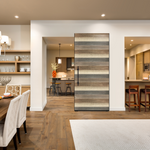
While traditional flat-track barn door hardware has an exposed wheel that rolls along a track, the Houdini Concealed Barn Door Hardware Kit hides the hardware behind the door for a sleek, modern, and minimalist look. A track mounted to the back of the door interfaces with rollers fixed to the wall to allow the door to slide. Wheels on the bottom of the door carry the full weight of the door and allow it to roll back and forth effortlessly. The kit comes with soft close mechanisms that bring the door to a controlled stop in both the open and closed position. Can be used in a single or double-door setup. Door is not included.
Entire system installs into door and wall in less than 30 minutes
We offer a 5 year, "no questions asked" warranty on all hardware parts
The hardware can be compatible with metal doors with the metal door adaptor (sold separately - see link below)
The kit includes soft close mechanisms that engage when opening and closing the door for a safe and smooth operation
The bottom track wheels can either be surface mounted or recessed into the bottom of the door
Door width needs to be 8" wider than opening. 12" combined width for double door installations
Minimum door thickness: 1- 3/4"
Built for a maximum weight capacity of 175lbs per door
The distance from wall to inside edge of door is 1-9/16"
A single door is used for narrow doorways that have enough space on one side of the doorway to slide the door over when opening it.
A double door (bi-part) configuration is used when there is enough space on both sides of the doorway. The doors meet in the middle and are pushed to either side when opening.
Find out what components are included with your barn door hardware kit (Door not included)
Our detailed installation guide make it easy to plan your installation
Shipping fee is $34. Ships within 5 to 7 business days via UPS.
(with metal door adaptor instructions)
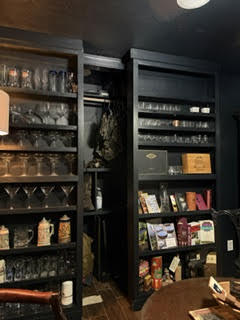
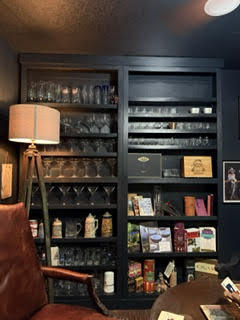
The Houdini Concealed Sliding Door Hardware Kit delivered exactly what we needed for our project. Installation was straightforward, the instructions were clear, and the hardware feels solid and well‑engineered. We built a full bookshelf using this kit to conceal a closet, and the sliding action is smooth and quiet. Once installed, the hardware completely disappears, giving the project a clean, seamless look. We’re extremely pleased with the results and would confidently use this kit again.
Thank you for the wonderful review. We’re glad to hear the Houdini kit worked well for your project and that you’re pleased with the outcome. We appreciate your support and hope to work with you again in the future.
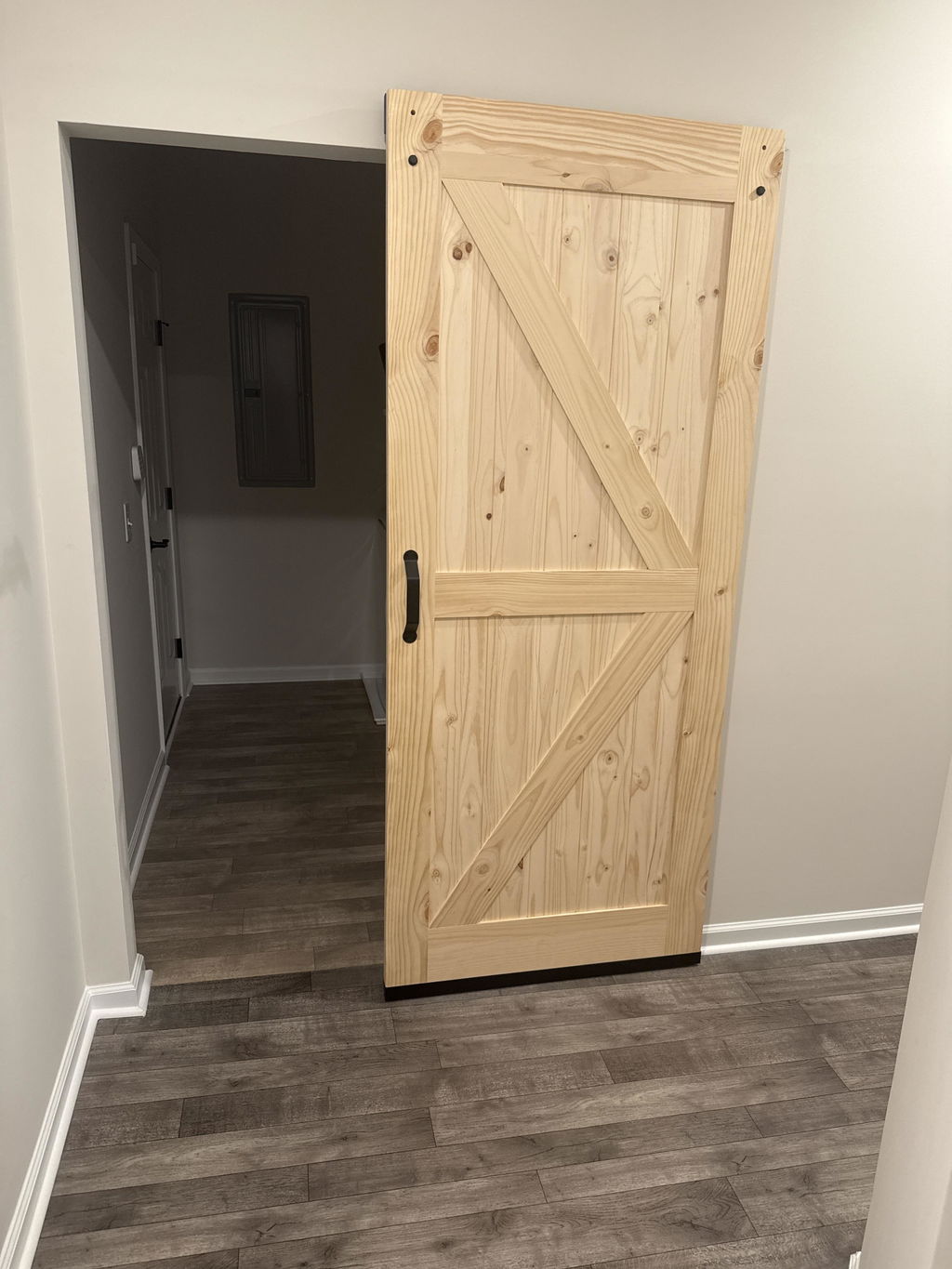
Love the glide and no visible hardware. Wish I knew the door needed to be 8’ wider on both sides to clear the doorway fully. Other than needing a larger door, it’s great!
Glad to hear you like the hardware kit and that the project turned out looking good! For a single-door configuration, the door should be 8'' (inches) wider than the opening. For a double-door configuration, the combined width of both doors should be 12'' (inches) wider than the opening. These requirements are also stated on the product page.
Houdini Concealed Sliding Door Hardware Kit
Thank you for the review Tykus, please let us know what your thoughts are on the hardware kit.
If you love the look of a sliding barn door but not the exposed rail and rollers, hidden barn door hardware solves that. At Dusty's Rustic Rolling Doors, we understand what homeowners want: a door that glides quietly and without the bulky track and hangers exposed.
Traditional flat track barn door hardware hangs a door from a visible rail on the wall. Hidden barn door hardware flips that: the track mounts to the back of the door, and small wheels roll along the floor instead. Nothing shows on the wall — just a clean, modern doorway. It's one of our most requested upgrades for closets, offices, and laundry rooms.
A track attaches to the door's top back edge and rides against rollers fixed to the wall. A second track along the bottom holds wheels that carry the door's full weight. Since the floor bears the load, not the wall, you'll need a flat, hard surface like wood or tile.
Beyond the look, concealed hardware protects trim, avoids drilling into decorative casing, and suits tight spaces where a header rail would look bulky. Built-in soft-close dampers ease the door shut, too — no slamming.
Because the rail sits behind the door instead of above it, invisible sliding panel tracks give you full sliding function without hardware competing with your décor.
These kits are built for solid wood doors at least 1-3/4" thick. Timber holds the fasteners well and keeps the system rigid and quiet.
Installation follows five steps: attach the top track to the door's back edge, attach the bottom track and wheels, mount the wall bracket, install the floor guide, then hang the door and lock in the anti-jump safety bars. Most installs take an hour or two with basic tools — no contractor needed.
Plan for about 1-9/16" of clearance between the wall and the inside face of the door — the space the rear track and rollers need. Measure door height from the top track down to the finished floor, adding roughly an inch of adjustment room.
Beyond closets, this hardware works well for sectioning off a home office nook, pantry, or laundry area without a swinging door's footprint.
Because the door slides flush against the wall, it frees up floor space a swinging door would otherwise require — ideal for tight entryways, hallways, and small rooms.
Good hardware has to carry real weight. This kit's steel-and-urethane bottom wheels support doors up to 175 lbs and are cycle-tested for years of daily use.
As the bottom track can be mounted to the face of the bottom of the door or recessed in the bottom of wooden doors, the vertical gap between the bottom of the door and the floor varies. If the bottom track is mounted directly to the bottom of the door, it will sit 1-½” taller than if it is recessed. The distance from the floor to the bottom of the bottom track is ~7/16”
Do you require biparting layouts or single-closure configurations?
This depends on your opening. A single door suits narrower spaces with room to slide one panel aside. A biparting (double-door) layout suits wider openings, with two doors meeting in the middle. Dusty's Rustic Rolling Doors stocks kits for both. Keep in mind that the door should be at least 8” wider than the opening for a single door, and that both doors combined should be 12” wider than the opening for a bipart configuration. This is to ensure that the door covers the rolling mechanism and overlaps the other side of the doorway.
Are your entries constructed from solid material or hollow core?
Solid core only. Hidden hardware attaches directly to the door's top, bottom, and back, so it needs a slab at least 1-3/4" thick — hollow-core won't hold the fasteners or weight safely.
Browse verified customer installs and Judge.me reviews on our site, then shop the Houdini Hardware Concealed Kit at Dusty's Rustic Rolling Doors, or call our specialists to size your door correctly.